
Author: Ambuj Khanna

  • Why Do We Suffer in Life?

    Why Do We Suffer in Life?

    Every human being on this Earth experiences suffering. The more good a person is, the more he suffers.

    In this post, we will explore 3 spiritual reasons for our suffering.

    1. Difference in the ‘Power of Aura’

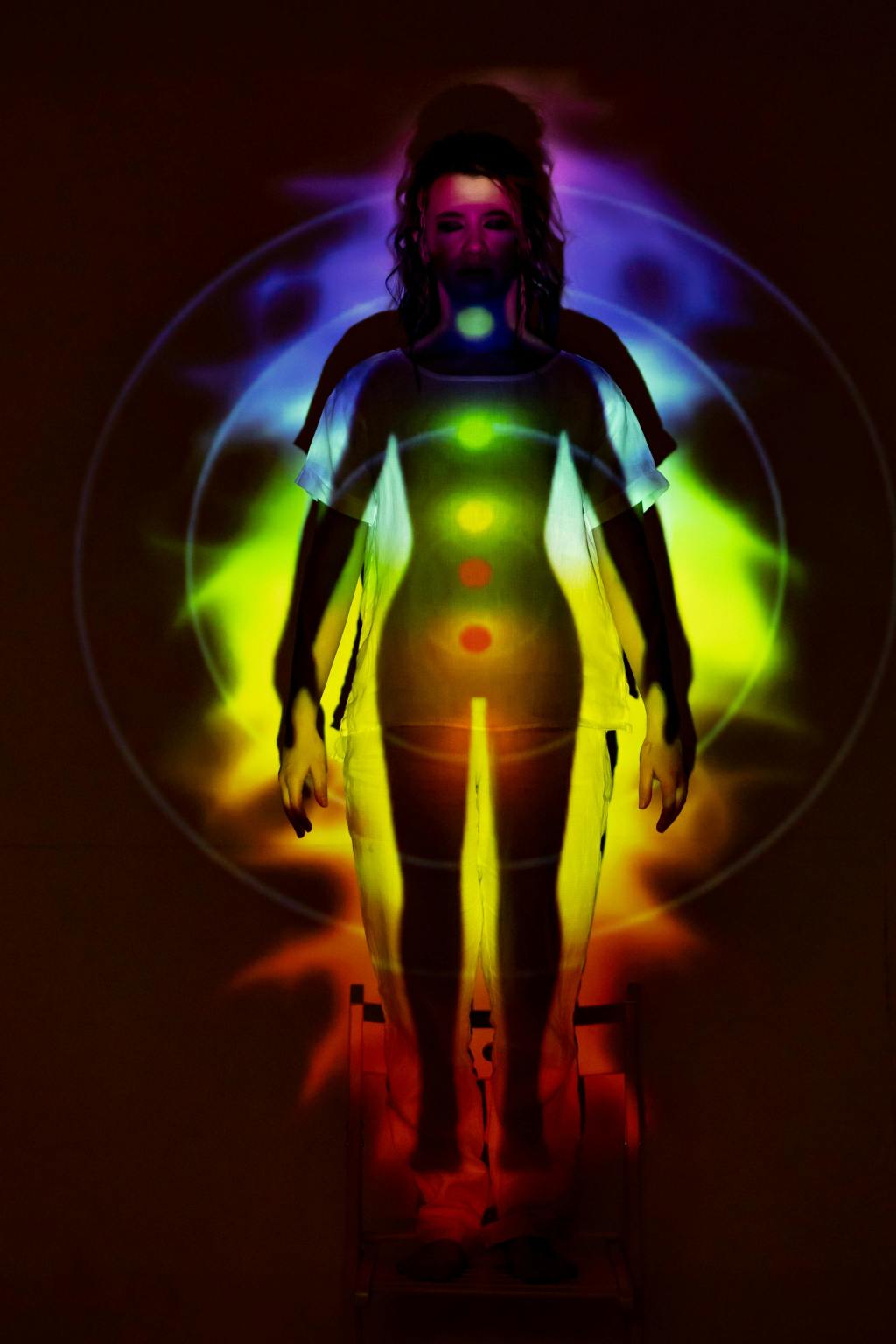
    Every living being on this Earth has an energy field across its body called the ‘Aura’.

    There is a perfect degree of this Aura. Degree is the power, and hence the term ‘Power (degree) of Aura’.

    So there is a difference in the ‘power of Aura’ of all living beings. The more sensitive a person is, the more their ‘power of Aura’.

    The more the ‘power of Aura’, the more a person is guileless, selfless, and tolerant. The less the ‘power of Aura’, the more a person is full of guile, selfishness and intolerance.

    Just like there is a degree in sensitivity, the same is true for the ‘power of Aura’. And due to the existence of a degree, there is suffering.

    If all human beings were guileless, selfless, and tolerant, there would be no suffering. But because there is a difference in degree, suffering exists.

    2. Attachment to the Material World

    The material world includes material success, competition, ambition, wealth, material possessions, and high socio-economic status.

    The more a person is attached to this material world, the more he suffers.

    The material world is a ‘Mirage’ in which a materialistic person never feels content.

    3. In the End…destiny

    A child is born to a beggar, and another child is born to a millionaire. Some children are born with a disability, while others are born completely healthy.

    One couple is childless, while another couple has a child. One couple divorces, and another couple lives happily.

    This is what destiny is all about. Some things are not in our hands. No matter how hard we try to escape our bad destiny, our every effort is in vain.

    Hence, destiny is one of the most important reasons for our suffering. And we have no choice but to let things happen as they are.

    Whatever is destined not to happen will not happen, try as you may. Whatever is destined to happen will happen; do what you may to prevent it. This is certain. The best course, therefore, is to remain silent.

    -Ramana Maharshi

  • What Is the True Meaning of Vairagya?

    What Is the True Meaning of Vairagya?

    In this post, I will share my personal experience with you, but first, let’s understand what ‘Vairagya’ is.

    Vairagya

    Vairagya is a Sanskrit term which means detachment and dispassion. Detachment means the absence of attachment to the material world.

    On the other hand, dispassion means freedom from attachment to pleasure, praise, and relationships, among other things, without letting them disturb inner peace.

    Vairagya simply means living like a lotus, present in the water (material world) but untouched by it.

    The material world includes material success and achievements, competition, material possessions and high socio-economic status.

    It is the ego which compels one to achieve what includes the material world. And hence, the ego is the most significant barrier to entering the world of spirituality.

    Kundalini Awakening and Detachment

    When a person experiences a full Kundalini awakening, the process of detachment begins. Interest in materialism begins to decline.

    One thing I would like to emphasise is that the detachment process after Kundalini awakening is a gradual one.

    It is not necessary that only a person awakened to Kundalini can attain Vairagya. Many saints in the past didn’t experience Kundalini awakening but still attained Vairagya.

    This is because the ego begins to lose its grip, and the effects of materialism start to decrease. The material world begins to look like a ‘Mirage’!

    My Experience

    I experienced a full Kundalini awakening in August 2014 at the age of 31. The awakening was like a new birth.

    Before my awakening, I wanted to enter the Bollywood (Indian Film Industry). Although I was not interested in money, I was interested in fame.

    My dream was to leave a mark on this world through my talent. Yes! I wanted to receive big awards, including Oscars.

    But after my awakening, I realised my purpose. I realised that I have been sent here to raise the consciousness of this world with all the true knowledge I have attained since my awakening. And this purpose is a selfless service.

    After my awakening, my ego dissolved, and my interest in materialism started to decrease. At present (September 2025), I have attained 75 per cent Vairagya. However, I still have a 25 per cent engagement rate.

    Signs of my 75 per cent Vairagya:

    1. Dissolution of Ego
    2. No interest in material success or competition
    3. Contentment
    4. No interest in money or possessions
    5. Living a life of purpose to raise the consciousness of this world
    6. No interest in small talk, materialistic conversations, news and politics
    7. Strong interest in spiritual conversations, which are rare in this material world

    Being Content at This Stage

    At 75 per cent Vairagya, I am still happy and satisfied. I am living a life of contentment. I have been in solitude since 2002.

    I have a loving mom who protected me when I was in hell. She is still with me and continues to support me. She is getting old, and I have a great responsibility to take care of her in her old age.

    Yes! I am deeply attached to my mom, and I can’t live without her. I am truly blessed to have her in my life.

    True Vairagya

    True Vairagya is not considered external renunciation. In fact, it is to be in the family, fulfilling all responsibilities such as taking care of parents, partner, and children, while still being inwardly detached!

    The Message

    One of the most important things which I have realised is that you can’t force yourself to attain Vairagya. In fact, it occurs naturally. If you are destined for it, you will have it.

  • What Is the True Meaning of Gratitude and Its Importance?

    What Is the True Meaning of Gratitude and Its Importance?

    In this post, we will explore the true meaning of gratitude and its importance.

    The True Meaning of Gratitude

    Gratitude simply means to express thankfulness to someone who has already done a favour to you without your expectation.

    That someone can be anyone, a parent, a friend or the higher power.

    Gratitude is considered a medicine which, if taken, will provide a divine peace.

    First…a Few Things We Must Be Grateful for in Our Destiny:

    1. Basic Needs, Like Food and a Home

    Many people on Earth don’t have a home, let alone enough food to survive.

    In poor countries, people die because they do not have a shelter in winter. But most people have these basic needs.

    2. A Loving Family

    All of us have a family who loves us, cares for us and supports us in our difficult times.

    A family in which we have parents, a partner and children. Whenever we feel low or demotivated, our family lifts us up.

    3. A Close Friend

    Many of us feel the need to talk to someone when we feel lonely. A person who listens to us and makes us cathartic. That’s what a close friend is all about.

    Even one close and faithful friend who can take a stand for us when people are against us is much better than a dozen. It’s a blessing to have such a friend who plays a role like a family.

    4. Good Health

    In today’s world, many people suffer from various illnesses. Completely healthy people, especially in old age, are hard to find.

    Good health is what everyone desires, and it is fortunate to have it. That’s why health is considered a form of wealth.

    Now…The Importance of Gratitude

    Every object in this universe has an energy field surrounding it called ‘Aura’. We can’t see this invisible field, but we can feel it.

    Whenever we express thankfulness to someone, our Aura becomes stable. That’s why we experience peace and calm whenever we express gratitude to someone.

    By expressing gratitude, we only help ourselves first, subconsciously. And then emit positive vibrations to the person to whom we are expressing gratitude.

    In the same way, we feel pleasant when someone expresses gratitude to us for the favour that we do to that person.

    Thankfulness is one of the most important friends of a humble person

    -Ambuj Khanna

  • Does God Exist? Who Created the Universe?

    Does God Exist? Who Created the Universe?

    I was born in a Hindu family. Right from childhood, I experienced extreme pain and suffering. I was bullied by students almost every day and beaten by teachers.

    Moreover, I had an abusive father who used to beat me for not studying. This used to happen every day in school and at home.

    At the age of 17, I experienced a spiritual awakening. Due to such pain and suffering, both at home and at school, I became an atheist.

    Finding My Guru

    During those days, I found my Guru, who was a spiritual teacher at my school. I began to have questions about this creation. He answered all my questions using logic and explained that God is a higher power, a formless entity.

    Before my spiritual awakening, I used to cry in front of Hindu idols. Since childhood, I had prayed to God for good classmates and teachers. But my every prayer was useless.

    But when I met my Guru and he helped me understand God and this creation, I left my Hindu religious conditioning.

    Although in school I was assured that there is a power behind all this creation, which we call “God”. But even after leaving school, I still doubted the existence of God.

    A Turning Point… Kundalini Awakening

    However, a turning point came into my life in August 2014, at the age of 31. I experienced a Kundalini awakening.

    I realised God by myself. I realised God is not a person who looks like us. It is beyond our level of imagination as to ‘How is He’. Is he a form or a formless entity? Then, who is ‘He’ and how can we understand him?

    I was a science student in my school. I still remember my Guru’s words. I once asked him about science, and he told me that science itself is, in reality, a creation of God.

    When my Kundalini was awakened in 2014, I began receiving answers to my questions. I was talking to a force through intuition in my solitude.

    I started getting answers to my scientific questions, which were:

    1. The planets in our solar system are perfectly positioned from the Earth, where life on Earth occurs.
    2. All the animals that breathe as well as perform sexual reproduction ‘instinctively’.
    3. The blood which flows in our veins is perfectly pumped by the heart.
    4. What is intuition? It is what a hidden force tries to make us feel, and through that feeling, we can know the truth.

    During those days, I gained wisdom on my own through solitude and intuition.

    I fell in love with God, thinking I am God’s beloved. I sincerely believe that it is because I am a pure-hearted soul; God is protecting, guiding, helping, and taking care of me.

    The Final Realisation

    I realised that my extreme pain and suffering were a part of a divine plan. I rose from the ashes (or my suffering) like a phoenix! It was God who made me believe that he exists.

    Out of suffering have emerged the strongest souls; the most massive characters are seared with scars

    -Kahlil Gibran

  • What Is Intuition? Is It the Voice of God?

    What Is Intuition? Is It the Voice of God?

    I am a highly sensitive person (HSP). From a young age, I was gullible. I used to blindly believe others and got fooled very easily.

    My Spiritual Awakening

    Gradually, when I grew up and reached the age of 17, I experienced a spiritual awakening. Then I became intuitive and started reading the faces of my teachers at my school.

    Although I became intuitive, I was immature. I didn’t know what to talk about or when to talk about.

    But when I experienced a spiritual awakening, I started talking to the higher power of the universe (the Source or God). I started getting spiritual wisdom.

    I started questioning the religion. I found my Guru, a spiritual teacher at my school. He helped me use logic and answered my questions as I was very inquisitive.

    Being Guided and Helped by a Secretive Force

    Then I further realised that I have a sixth sense. I am guided and helped by a secretive force with which I am connected. And this is the same force with whom I talk, especially in solitude.

    This force protects me whenever I put myself into trouble. This force often saves me when others try to deceive or take advantage of me.

    When I reached the age of 31, I experienced a Kundalini awakening. Then I understood that this process, in which I talk to this force, is nothing but intuition. And this force whom I speak to is the higher power of the universe or God.

    Enhancement of Intuition

    I realised that I speak to a force only after my Kundalini awakening. It was because, after my Kundalini awakening, my intuition had become considerably enhanced. As a result, I began to receive spiritual wisdom effortlessly.

    After Kundalini awakening, I started reading faces more easily. I started noticing the body language, primarily when a person lies. Although the body language reading began after 17.

    One of the most critical aspects of intuition after my Kundalini awakening was my ability to easily detect the guile of dishonest people. In this way, I can’t be fooled easily like I was when I was small.

    The Real Meaning of Intuition

    When I was small, I only understood the meaning of intuition according to the dictionary. However, after my Kundalini awakening, I gained a deeper understanding of the spiritual meaning of intuition.

    So, I understood that intuition is what God talks to you, and through it, you know the truth. Whether that truth is a spiritual truth or understanding the truth when someone tries to fool you.

    I also realised that highly sensitive people are highly intuitive. In fact, intuition has a degree. The stronger the sensitivity, the stronger the intuition. The more sensitive a person is, the more intuitive he is.

    Today, I sincerely feel that God helped me and guided me because I am a pure-hearted soul. And I was never alone when I was small. I was (and I am) being protected and taken care of by God or the higher power of the universe.

    If you are sensitive, you don’t need to worry; God is with you through intuition

    -Ambuj Khanna

  • Spirituality vs Materialism: The Balance Between the Two

    Spirituality vs Materialism: The Balance Between the Two

    In this post, I will discuss the two opposing tendencies that exist in the world. We will explore their differences and how we live a life in balance between the two.

    Spirituality

    Spirituality is the belief that high moral virtues, such as a pure heart, selflessness, humility, and tolerance, are far superior to material success, wealth, material possessions, and socio-economic status.

    It is a belief that the goal of a person’s life is enlightenment, spiritual awakening and a divine connection with the higher power of the universe (The Source or God).

    Spiritual people are free from greed and don’t prioritise money or material possessions. They are very humble and do not seek to satisfy their ego to achieve a high socio-economic status.

    These people don’t discriminate based on caste, religion or status. They always give equal respect to all, including the poor.

    Materialism

    Materialism is the belief that material success, wealth, material possessions, and high socio-economic status are far superior to spiritual values such as a pure heart, selflessness, humility, and tolerance.

    Materialistic people are very greedy and prioritise money and material possessions. They can be religious, but they often discriminate based on caste, religion and socio-economic status.

    Materialism has a perfect degree. Some people are materialistic, some more so, and some even more so. The stronger the materialism, the less sensitive a person is!

    The Balance Between the Two

    Being spiritual doesn’t mean to live an ascetic life and deny a comfortable living. It only means that you live a life of contentment.

    In fact, some people are partially spiritual and partially materialistic. They have a balance between spirituality and materialism. What needs to be understood is that an excess of materialism will never make a person truly happy and satisfied.

    If you have a feeling that you no longer need more while still living a comfortable life, you are spiritual. This is because it will bring you happiness and satisfaction. And the essence of spirituality is being happy and satisfied.

    Be thankful for what you have; you will end up having more. If you concentrate on what you don’t have, you will never, ever have enough

    -Oprah Winfrey

  • What Is a Kundalini Awakening? And What Are Its Signs and Symptoms?

    What Is a Kundalini Awakening? And What Are Its Signs and Symptoms?

    In this post, I will share my personal experience with you, but first, let’s explore what “Kundalini” is.

    What Is a Kundalini Awakening?

    There are seven subtle energy centres across our spine called ‘Chakras’. Kundalini is a form of energy (or Shakti), which is located at the base of our spine in the lowermost chakra called Mooladhara chakra (or base chakra).

    However, when this energy, known as Kundalini, is awakened, it moves upwards and crosses six chakras. The names of the six chakras are in ascending order. The Mooladhara, Swadishthana, Manipura, Anahata, Vishuddhi, and Ajna.

    After Kundalini crosses these six chakras, it reaches even higher to the uppermost chakra at the top of our head, called the Sahasrara chakra (or Crown chakra).

    Once Kundalini reaches the Sahasrara chakra, the process is considered a ‘full Kundalini awakening’. And this full Kundalini awakening is extremely rare! Most people experience only partial awakenings, but not a full Kundalini awakening.

    My Experience

    I experienced a full Kundalini awakening in August 2014 at the age of 31. The awakening was the turning point of my life. It transformed me completely.

    I had never heard about the word ‘Kundalini’ before my awakening. However, it was after my awakening that I researched the internet for information about my signs and symptoms. I discovered that what I experienced was a phenomenon known as ‘Kundalini Awakening’.

    I used to practice Pranayama (which I still do), a part of Yoga. Pranayama is a group of ancient Indian breathing exercises. It is considered to be one of the sources of awakening the Kundalini.

    But it is not certain that a person who practices Pranayama or other techniques can awaken their Kundalini.

    So many people practice Pranayama, meditation, and other techniques for years, yet still do not experience a Kundalini awakening.

    On the other hand, some people don’t do anything but still experience a full Kundalini awakening accidentally!

    My awakening was a roller-coaster ride, and its signs and symptoms were extremely uncomfortable.

    My Signs And Symptoms

    Negative

    1. Involuntary jerks, especially in the arms and legs, were like someone was giving me electric shocks.
    2. Pressure inside the skull as if my skull were about to explode
    3. Mood Swings
    4. Insomnia
    5. Increased sensitivity to light and sound.
    6. Psychosis (I lost touch with reality)
    7. Decreased sexual desire
    8. Loss of appetite
    9. Pain in back and neck

    Positive

    1. Heightened Intuition
    2. Due to increased intuition, I was getting spiritual wisdom, and I had a shift in consciousness
    3. Increased IQ
    4. Dissolution of Ego
    5. Reduced interest in materialism
    6. Falling in love with the higher power of the universe (The Source or God)
    7. Finally, understanding my purpose for being here in this world

    My Purpose

    After experiencing a Kundalini awakening, I came to understand my purpose for being in this world. And that is to increase the consciousness of the world with all the true knowledge which I gained after my awakening.

    I have already started my mission. I have already written a spiritual book and now have started this blog.

    Being a writer, I never feel that it is I who is writing. In fact, I often feel that it is a higher power guiding me to write. And, as a medium, I am only used for writing, and words flow on their own.

    I always feel that I am a non-doer. I have completely surrendered myself to the higher power of the universe. I am just flowing downstream with its flow.

    I have experienced extreme pain and suffering in my past since my childhood. But I never ever feel that I deserve a Kundalini awakening.

    I believe I have been sent here to make this world a better place. And if I can do so, I will feel that my birth has been meaningful.

    When you succeed in awakening the Kundalini, so that it starts to move out of its mere potentiality, you necessarily start a world which is totally different from our world. It is the world of eternity.

    -Carl Jung

  • Are You a Highly Sensitive Person? 8 Signs to Recognise It

    Are You a Highly Sensitive Person? 8 Signs to Recognise It

    High sensitivity is said to be both a curse and a blessing. Highly sensitive people feel everything deeply. According to research psychologist Dr. Elaine Aron, who discovered the concept of high sensitivity, highly sensitive people comprise approximately 15-20 per cent of the global population.

    High Sensitivity… A Blessing

    Highly sensitive people are among the most honest, truthful, trustworthy, and selfless individuals you will ever encounter. They are simply pure-hearted souls. They are guileless, selfless, and tolerant.

    Highly sensitive people can empathise with others more deeply than those who are not highly sensitive. And hence it is a blessing.

    8 Signs of Being a Highly Sensitive Person

    1. You are deeply affected by the moods of others, whether they are happy or sad.
    2. You are particularly affected by caffeine and medications.
    3. You are deeply moved by the nature and works of art, such as painting, music, and literature.
    4. You have a powerful intuition.
    5. You are deeply spiritual and less materialistic.
    6. You are a kind-hearted and compassionate soul who can empathise deeply with others.
    7. You always think of others first before yourself.
    8. Whenever someone watches you from behind (in fact, at a 360-degree angle), you get to know that you are being watched, and your head subconsciously moves backwards to the observer who watches you.

    The Message

    It is true that highly sensitive people suffer a lot in this world. They often feel like aliens on Earth. But still, they are not alone. They are being protected and taken care of by the higher power of the universe (The Source or God).

  • What Are the Spiritual Benefits of Solitude and Its Importance?

    What Are the Spiritual Benefits of Solitude and Its Importance?

    What Is Solitude?

    Solitude is a state in which you find pleasure by being alone. It is a voluntary state that gives you solace from the overwhelm of the material world.

    It is a spiritual state in which you get deeply connected to the higher power of the universe (The Source or God).

    Here Are the 5 Spiritual Benefits of Solitude and Its Importance:

    1. Solitude Is the Source of Creativity

    Solitude plays a vital role in creativity. Many great scientists, artists, and philosophers used to work in solitude, and creativity often emerged on its own.

    It is in solitude that great scientists like Newton discovered the law of gravitation, playwrights like Shakespeare created their masterpieces, and philosophers like Plato and Socrates developed their philosophies.

    2. Solitude Makes a Person in Touch With the Higher Power (Or God)

    It is solitude that allows you to be constantly connected to the higher power of the universe. Although you remain in contact with the higher power at all times, due to frequent socialising, the connection gets disrupted.

    In solitude, you talk to the higher power through intuition. And you are guided, helped and taught secretly.

    3. Solitude Is a Protection Against Negativity

    Solitude always protects us from negativity. It is a state in which we socialise less with others and are away from negative vibrations.

    When we socialise with others, we get vibrations from them, both positive and negative.

    When someone understands you, encourages you and motivates you, you get positive vibrations.

    But when someone argues with you, unreasonably criticises you, you get negative vibrations.

    In solitude, our mind remains calm and at peace because we are away from negativity.

    4. Solitude Makes You Detached From the Material World

    Solitude brings detachment from the material world in which others are completely absorbed. It is because you are not interested in useless, materialistic talks, gossip, or earning money only.

    In solitude, you are least affected by the outside world, and this allows you to detach effortlessly.

    Detachment is to live like a lotus, present in water (the material world) but untouched by it.

    5. Solitude Is a Gift to a Sensitive Person

    Solitude is a very precious gift to a sensitive person. Solitude keeps a sensitive person away from vibrations. His strong aura remains undisturbed, and his mind is peaceful and calm.

    A sensitive person is often very creative, and in solitude, their creativity is further enhanced.

    The Message

    Finally, I would like to emphasise that solitude doesn’t mean completely withdrawing from society. A person in solitude can socialise sometimes, but still, they will need some alone time to recharge.

    Be so fulfilled with yourself that even when you are alone, you feel in good company

    -Irini Zoica

  • What Is Humility and Why Is It Important?

    What Is Humility and Why Is It Important?

    In this post, I will share my personal experience with you. However, first, let’s understand what humility is and how it is crucial in life.

    What Is Humility?

    Humility is one of the highest virtues that exists in this creation. If ego means “I am only”, humility simply means “I am none”. If ego creates repulsion, humility creates attraction.

    Humble Person’s Three Friends

    A humble person has three close friends: ‘Sorry’, ‘Thank you’ and ‘Please’. A humble person finds it very easy to apologise. Sometimes he apologises even when he is not wrong to keep the relationship harmonious.

    On the other hand, apologising is very difficult for an egotist. He doesn’t apologise even when he is wrong, particularly during conflicts.

    While humility is a gift, the ego is a curse. Whereas ego builds a wall, humility brings closeness

    My Personal Experience

    I was a little egotistical before my Kundalini awakening. But when I experienced my Kundalini awakening in August 2014, my ego dissolved.

    After my awakening, I never think that I am a ‘doer’. I never take credit for my accomplishments. In fact, I give all the credit to the higher power of the universe (the Source or God). I have surrendered to the higher power and flow with its divine ‘flow’.

    The Importance of Humility

    An egotist always praises himself, but people don’t praise him. On the other hand, a humble person never praises himself, but people praise him.

    So many saints, from Jesus to Buddha, who entered this world, taught the power and importance of humility.

    In today’s world, if a person is in a very high position, everyone respects them in their mind. But if the same person is humble, everyone respects them from the heart.

    Self-Respect

    Humility is not the absence of self-respect. Self-respect is crucial; otherwise, the world will crush you.

    Respect yourself, and others will respect you

    -Confucius

    However, difficulties occur when self-respect reaches an extreme level and turns into ego, particularly during conflicts.

    If I share my experience with you, then yes, even though I am humble, I always get angry when someone insults me. Moreover, I am a highly sensitive person (HSP) and get hurt when I am offended by someone.

    So, you see, it’s very natural to get hurt when someone insults you. It is because you should respect yourself, too, while giving respect to others.

    How to Know if One Is an Egotist or a Humble Person?

    To determine if someone is an egotist or a humble person, pay attention to their tone, the slight changes in their voice, and how they talk with people from a low socio-economic status. A humble person always gives respect to the poor.

    As I am a highly sensitive person (HSP), I respect everyone from the heart, including the poor. However, at the same time, I expect to be treated in the same manner.

    I have noticed through my experience that a sensitive person is always polite and humble. It is because he can empathise with others very easily, unlike a person who is not very sensitive.

    The Message

    In the end, I will say that a humble person is never a weak person. He is indeed very courageous. It takes a lot of courage to bend in front of others, and the humble person possesses that courage, unlike an egotist.